Kovana AI · B2B SaaS · Insurtech
Designing an AI-powered workflow for complex insurance policy review
Kovana is an AI-powered platform that helps insurance professionals identify policy gaps, exclusions, sublimits, and coverage risks, turning dense policy documents into actionable insights for sales, M&A, and diligence workflows.
I led end-to-end product design for the early-stage SaaS platform, taking the product from an undefined concept through its first MVP and subsequent multi-policy experience.
- Role
- Lead Product Designer
- Scope
- Product Strategy · UX Research · Information Architecture · Interaction Design · UI Design · Prototyping
- Timeline
- 8 weeks
- Team
- Product Manager · Technical PM · CTO · Full-Stack Engineers · 2 Co-founders
The problem
Reviewing a policy shouldn’t require hunting through hundreds of pages.
Commercial insurance policies are dense, inconsistent, and difficult to compare. Insurance professionals manually review documents to identify exclusions, sublimits, coverage gaps, and other risks, then translate those findings into recommendations their clients can understand.
From existing customer research, three problems consistently emerged:
Finding what matters takes too long
Critical information is buried across lengthy policy documents and often expressed differently from carrier to carrier.
Insights need context to be useful
Identifying an exclusion isn’t enough. Professionals need to understand why it matters and communicate that risk clearly to a client or stakeholder.
Comparing policies compounds the complexity
There was no scalable way to evaluate multiple policy programs side by side and quickly understand meaningful differences in coverage.
The opportunity
Kovana’s AI could analyze policy documents much faster, but generating information wasn’t the entire product problem.
The experience needed to turn dynamic AI output into something insurance professionals could trust, interpret, and act on.
How might we make AI-generated policy analysis feel structured and credible enough to fit into high-stakes professional workflows?
Constraints
Designing under uncertainty.
Dynamic AI output
The backend could return different structures and levels of detail depending on the policy. The interface couldn’t depend on perfectly predictable content.
A new interaction model
Document ingestion, AI analysis, contextual chat, exclusion tagging, and policy comparison needed to feel like one coherent workflow.
Evolving technical constraints
Backend capabilities changed throughout development, requiring interaction patterns that could adapt without destabilizing the experience.
Three weeks to the first MVP
The first usable workflow needed to reach development quickly, requiring clear prioritization of the core experience.
Research & discovery
Starting with the language of insurance professionals.
I analyzed 25 interviews with insurance professionals to identify recurring patterns around policy review, client communication, sales, and risk assessment.
Rather than organizing the product around what the AI could technically produce, I focused on how insurance professionals already thought about their work.
- Where are the meaningful gaps in this policy?
- Which exclusions create the greatest exposure?
- Are important coverages subject to sublimits?
- How does this policy compare with another program?
- What should I communicate to my client?
Information architecture
Creating a shared language between insurance, product, and AI.
Product, engineering, AI outputs, and insurance professionals didn’t always describe the same concepts in the same way.
I facilitated an information architecture workshop to establish a shared vocabulary and organize AI-generated information around concepts familiar to insurance professionals.
This allowed us to design around the user’s mental model rather than the underlying model architecture.
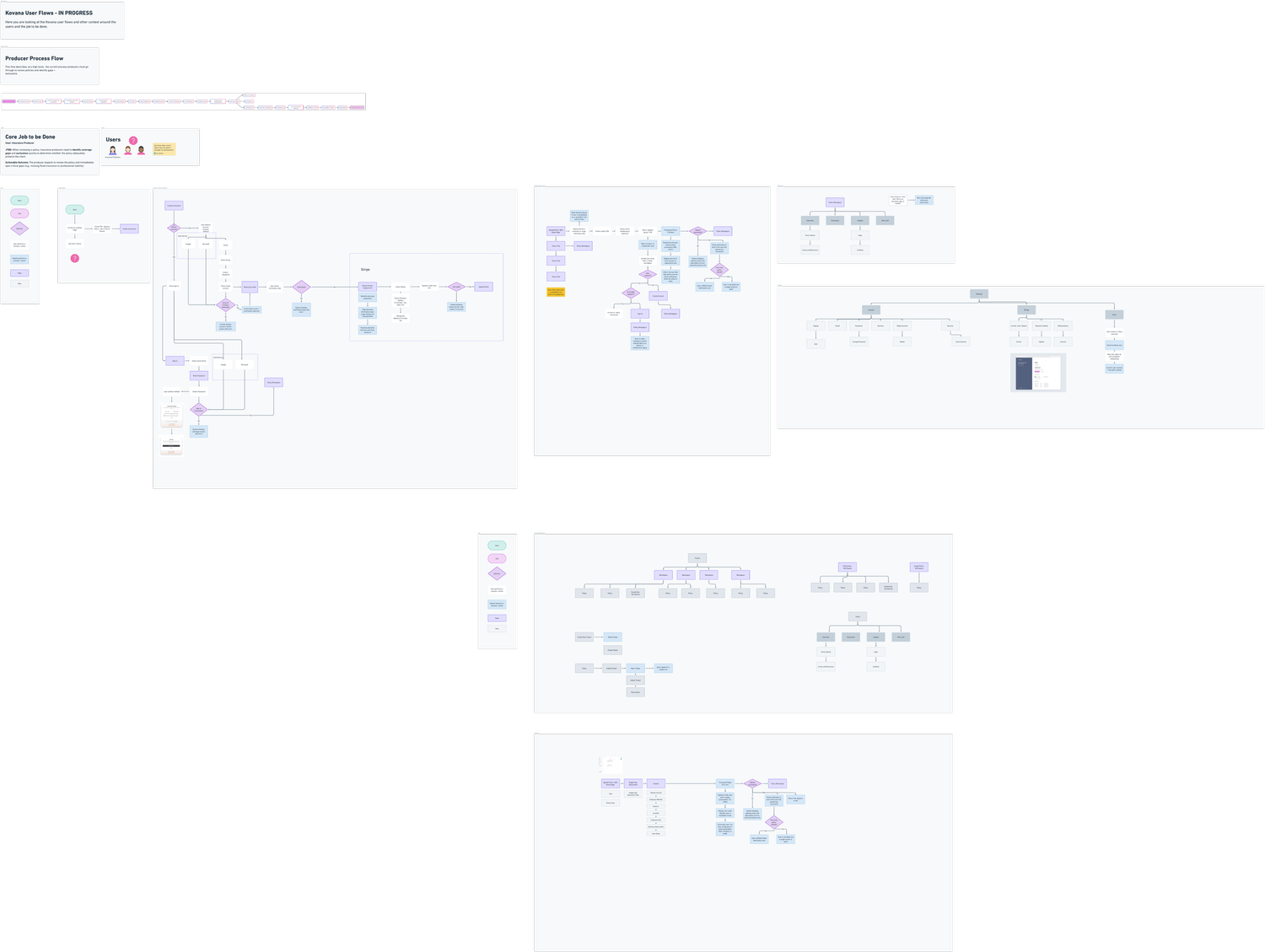
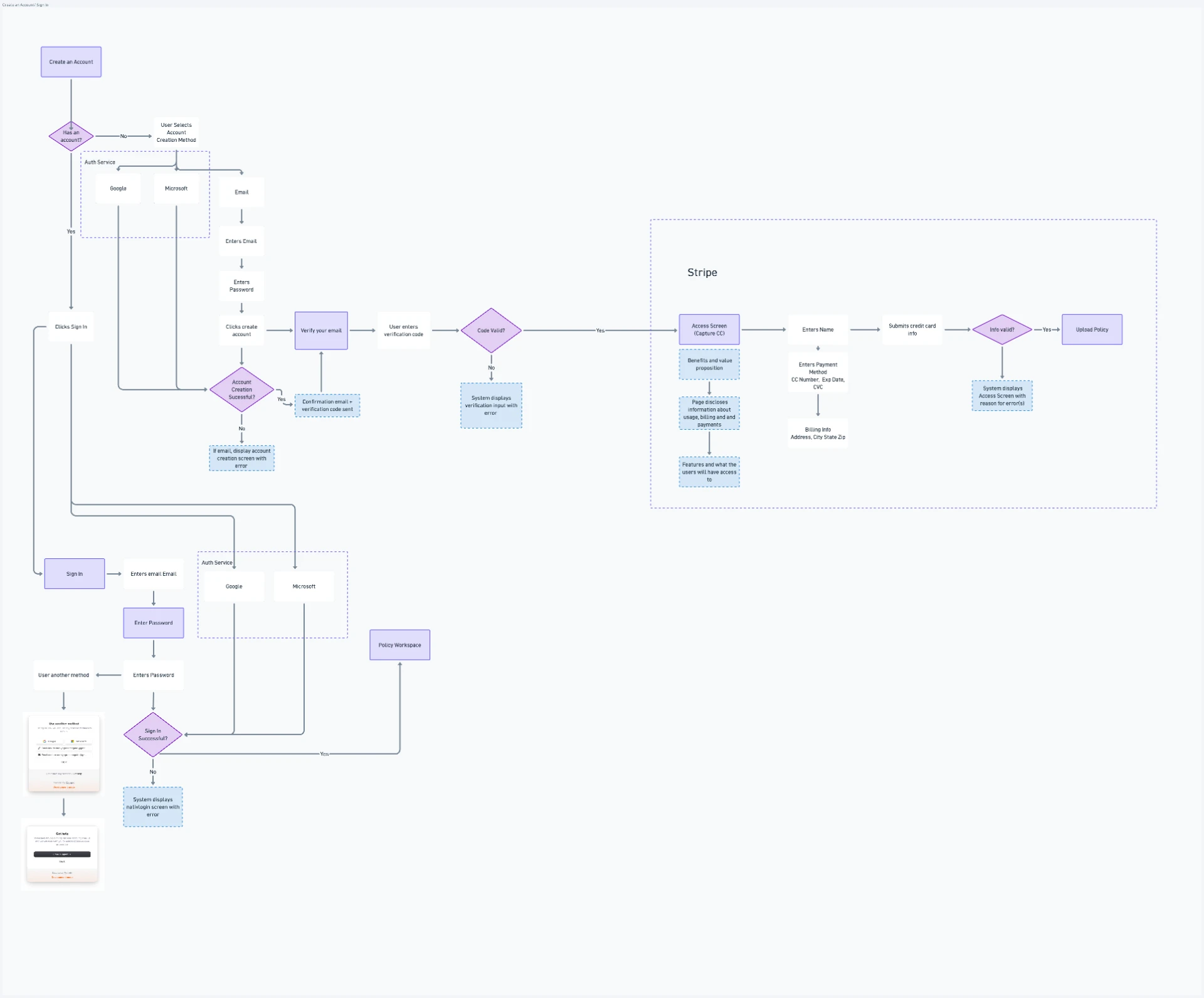
Mapping account creation, authentication, payment, and entry into the core policy workflow, including decision points, alternate paths, and error states.
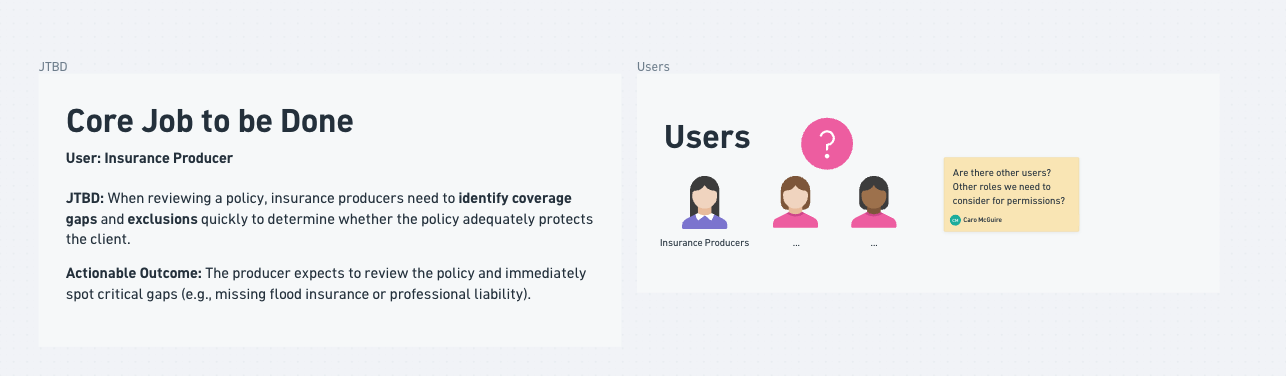
Framing the producer’s core need and primary user before designing the experience.
Organizing reviews, policies, and findings into a structure professionals recognize.
Designing the core experience
Four decisions that shaped the product.
01
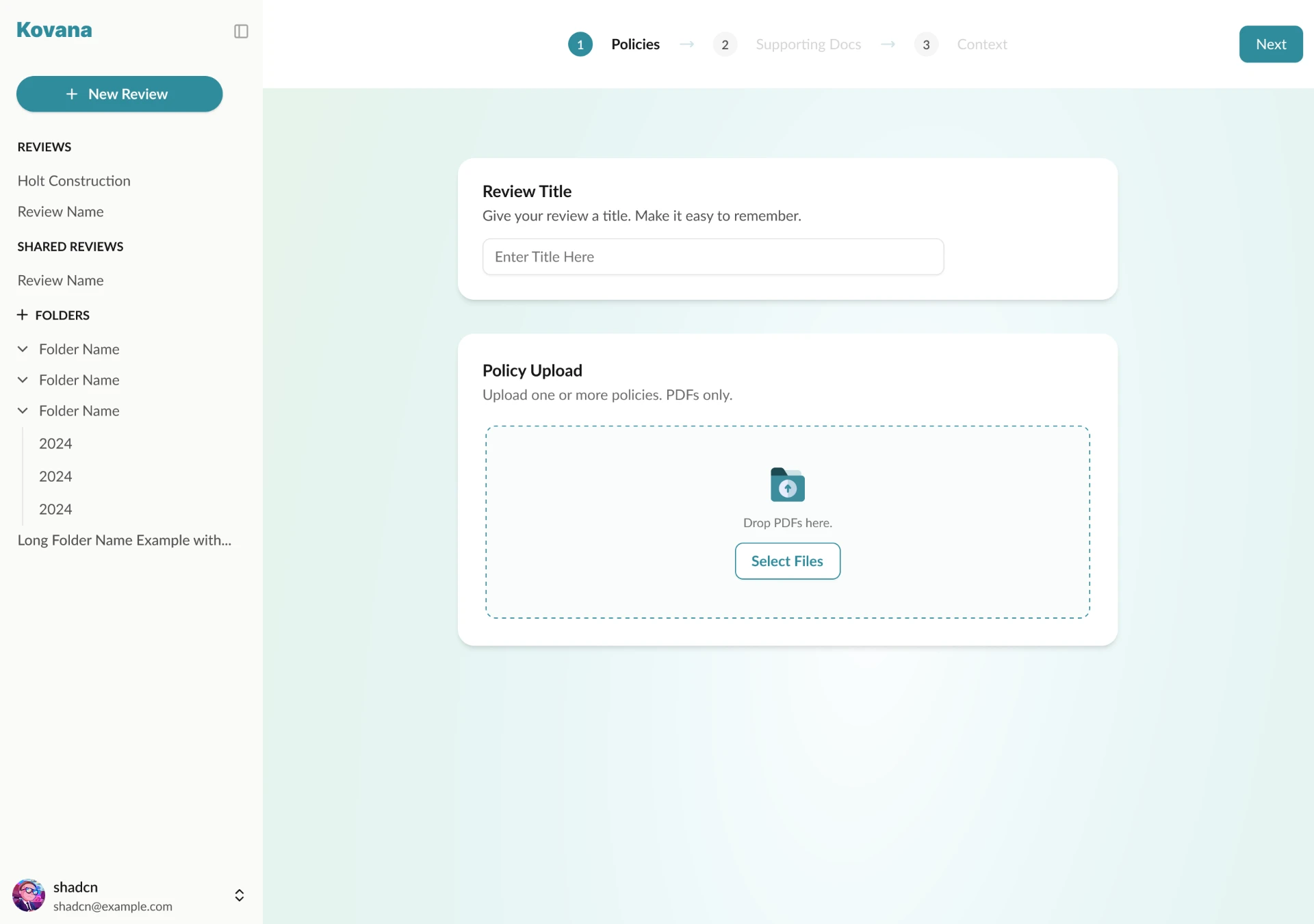
Start with the document, not the AI
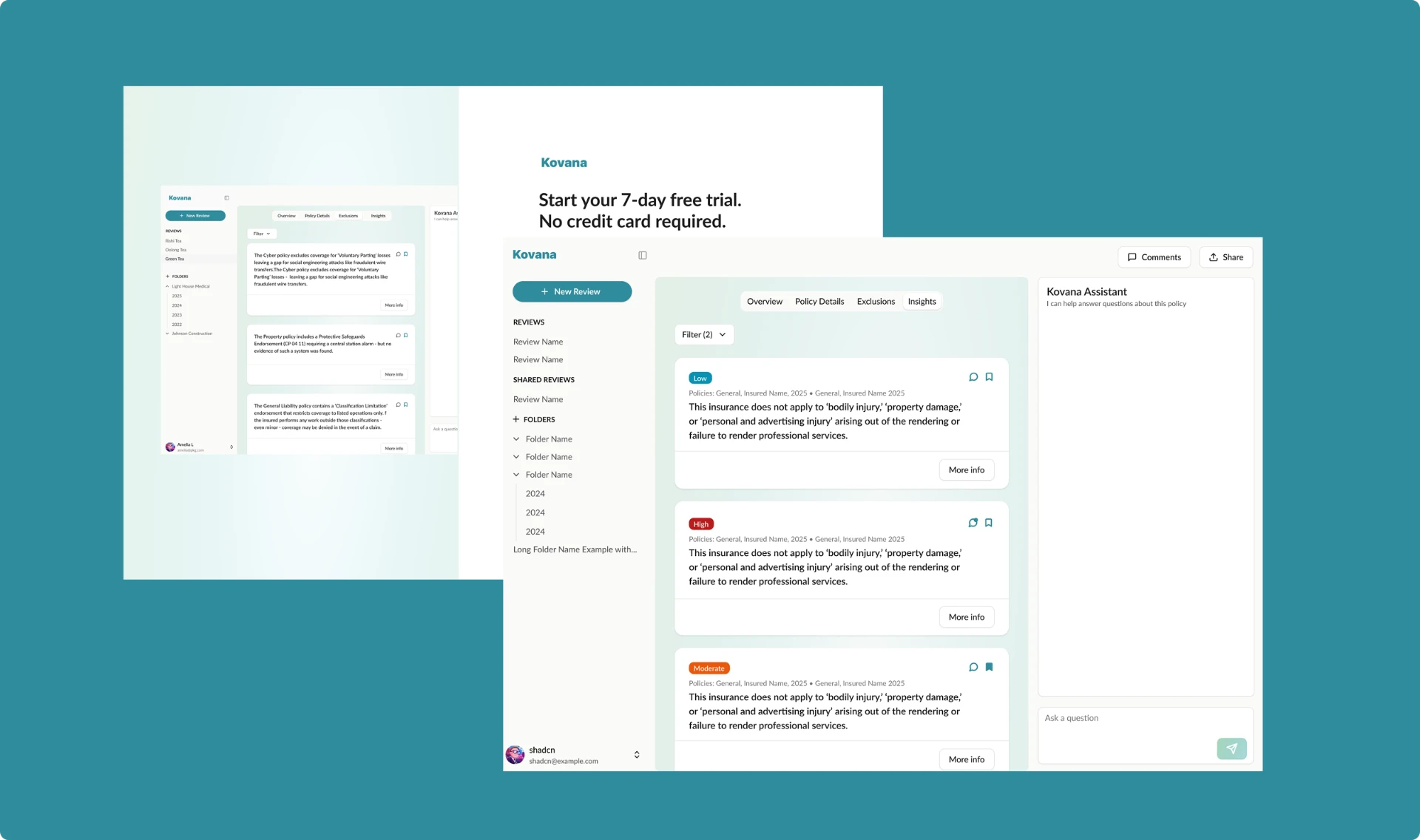
Instead of requiring users to learn how to interact with an AI system first, the workflow begins with something familiar: the insurance policy.
Users upload a policy and Kovana processes the document before presenting the analysis in a structured workspace.
02
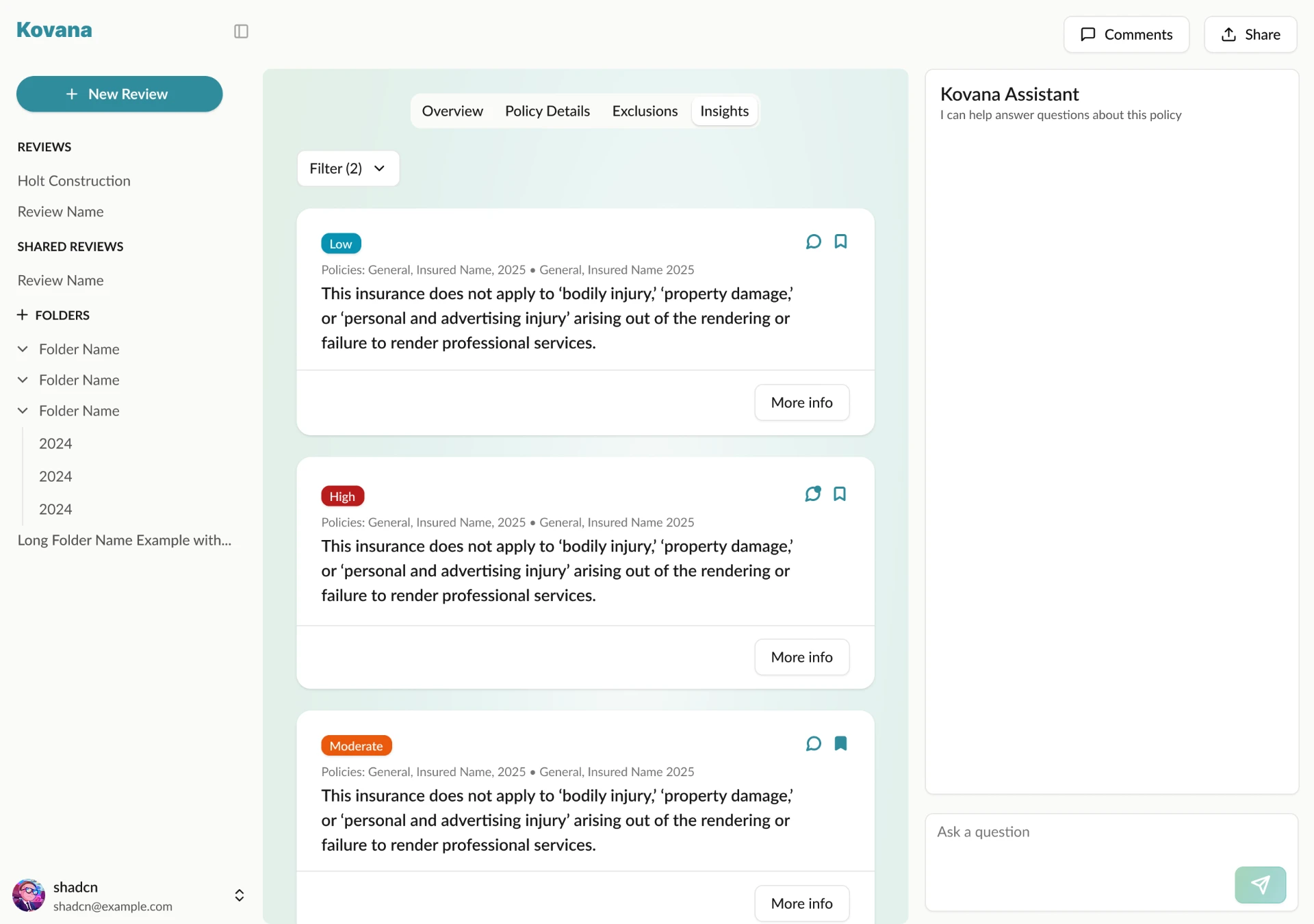
Turn AI output into structured analysis
Raw AI responses weren’t enough for professional review.
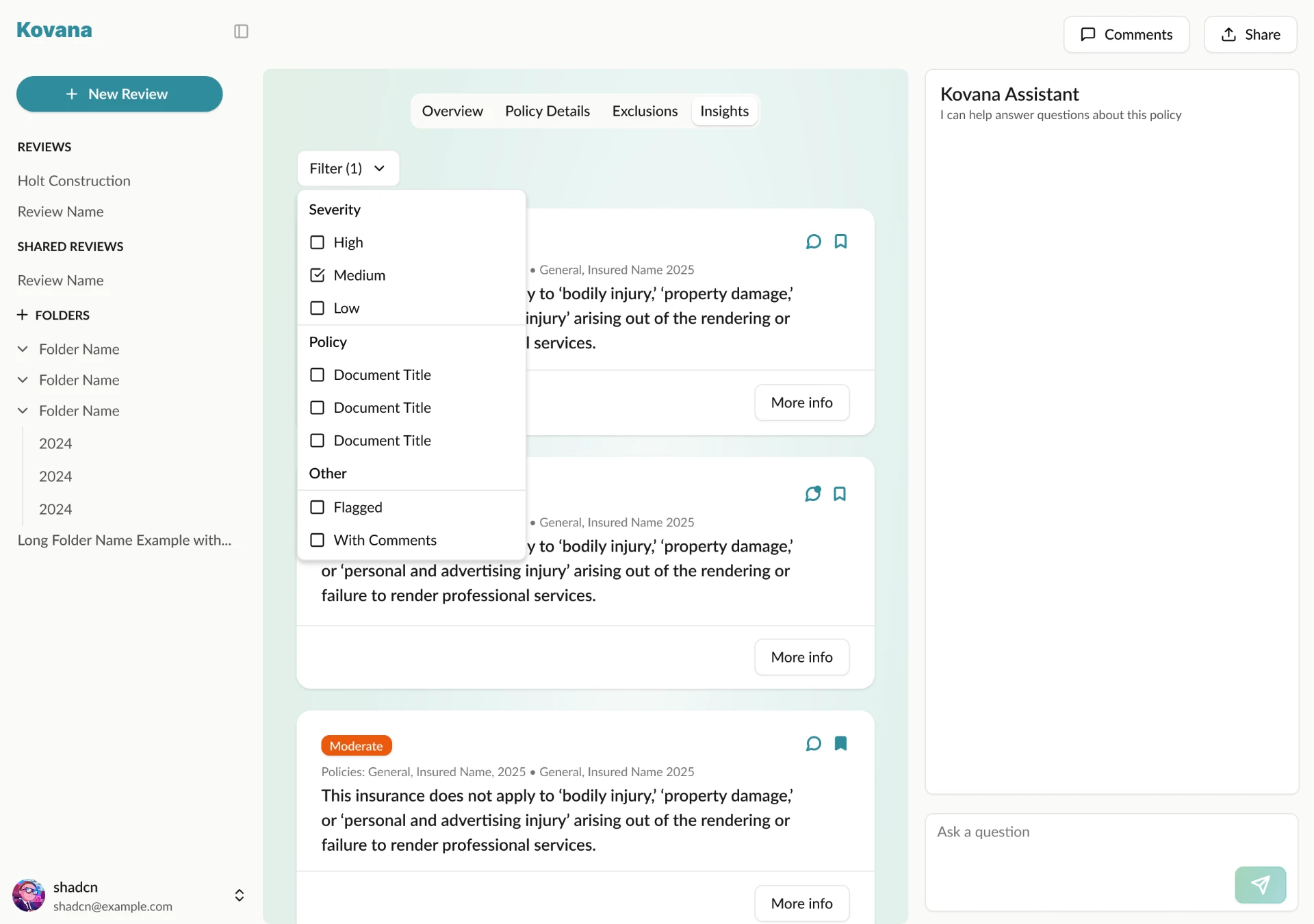
I designed the experience around structured categories for coverage issues, exclusions, gaps, and other policy risks while allowing enough flexibility to accommodate variable AI output.
03
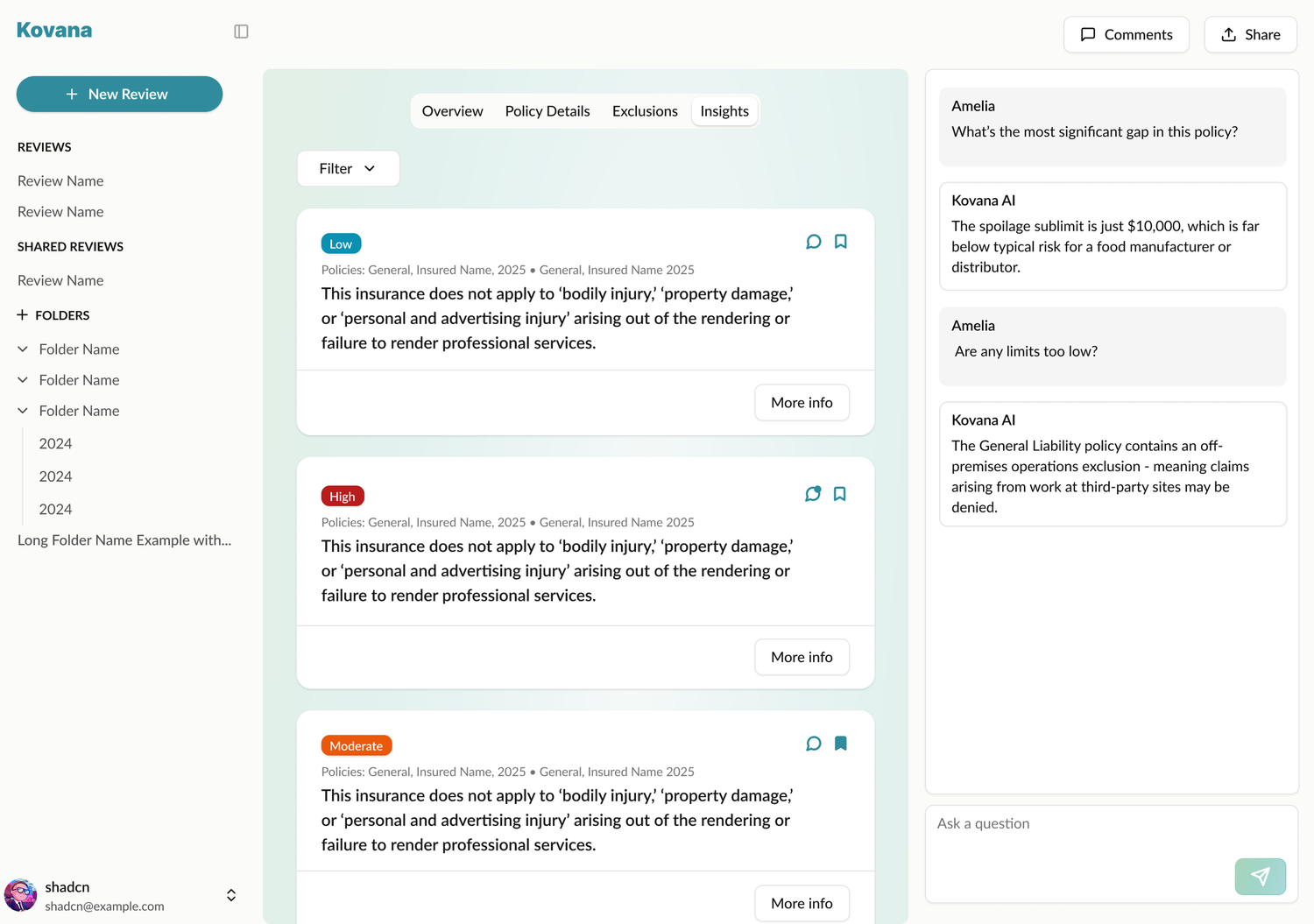
Let users investigate without losing context
Contextual chat lets users investigate individual findings, ask follow-up questions, and explore policy language without leaving the analysis workflow.
Rather than treating chat as the entire product, I designed it as a supporting interaction layer around structured analysis.
Structured UI
Consistency + scanability
Conversational AI
Flexibility + exploration
04
Scale from one policy to many
The first MVP focused on single-policy analysis.
Research showed that comparing programs was also critical for sales, renewals, M&A, and diligence. The second phase expanded the system into multi-policy comparison.
What’s important in this policy?
What’s materially different across these policies?
Designing for trust
For AI to be useful in insurance, speed isn’t enough.
Traceability
Connect insights back to underlying policy information wherever possible.
Hierarchy
Make high-priority findings distinguishable from supporting detail.
Consistency
Create repeatable patterns even when AI output varies.
Domain language
Use terminology insurance professionals recognize rather than generic AI terminology.
Human control
Treat AI as an analytical tool rather than presenting its output as unquestionable truth.
Designing for scale
Building on an existing system, then extending it for AI
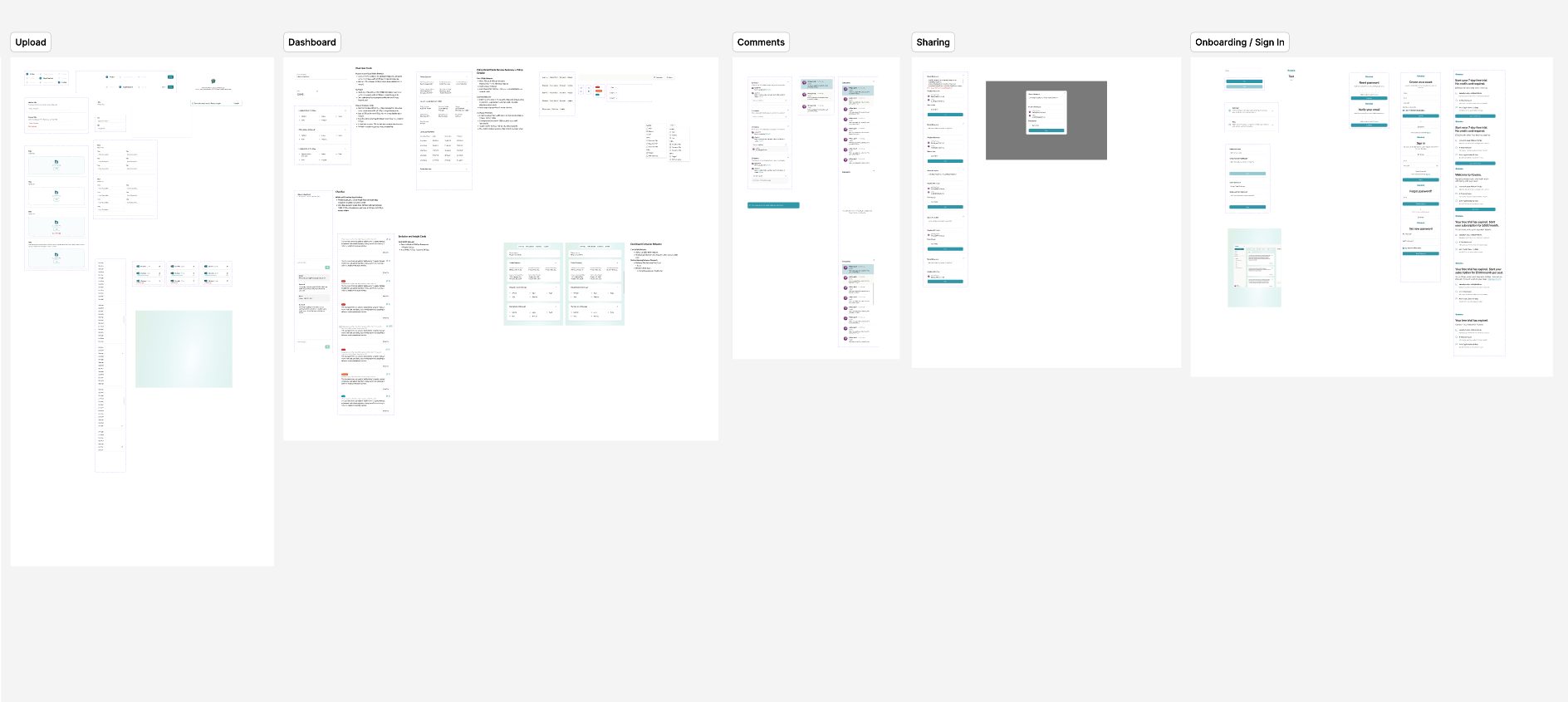
To move quickly, I used shadcn/ui as the foundation for the product’s component system, adapting its patterns and visual language for Kovana rather than designing every foundational component from scratch.
From there, I extended the system to support Kovana-specific workflows, including policy analysis, risk findings, document ingestion, and contextual AI interactions.
Because AI outputs could vary in structure and length, the components needed to accommodate unpredictable content while maintaining a consistent hierarchy and interaction model.
This approach allowed us to move quickly during the MVP while creating reusable patterns that could evolve alongside the product.
Outcome
From MVP to a scalable product.
Phase 01
Single-policy analysis
Phase 02
Multi-policy comparison
The MVP moved into pilot use with insurance firms, providing early feedback on AI-assisted policy analysis and the clarity of surfaced insights.
The initial product also established a UX framework that could expand alongside Kovana’s AI capabilities and support additional policy types and workflows.
Key learning
AI products need structure as much as they need intelligence.
One of the most important lessons from Kovana was that conversational AI isn’t always the experience.
In complex professional workflows, users benefit from predictable structure, recognizable terminology, and clear information hierarchy. Conversation works best when it gives users flexibility within that structure.
The project reinforced an approach I’ve carried into subsequent AI work: start with the user’s existing workflow, then determine where AI removes friction, not the other way around.
Beyond the product
I also built Kovana’s public-facing landing page using Claude Code, extending the product’s visual language into the marketing experience.